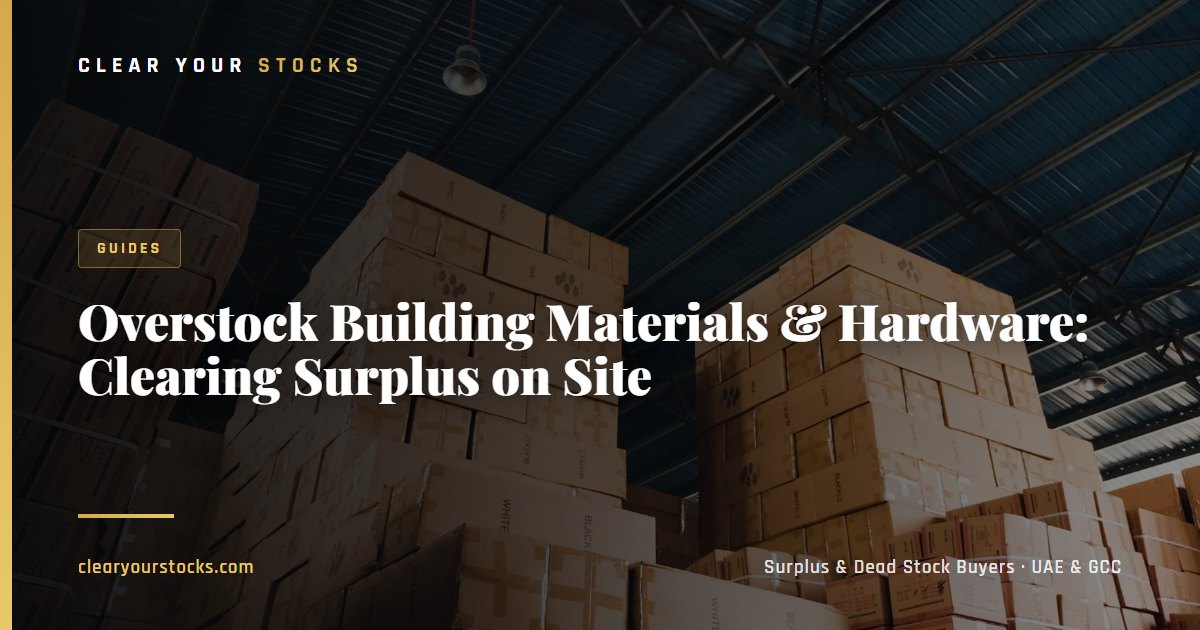
In the high-paced construction and hardware sectors of the UAE, inventory is often treated as a dormant asset. However, for every square metre of warehouse space occupied by obsolete tiles, end-of-run electrical fittings, or surplus MRO components, you are paying a compounding tax in the form of lost opportunity, maintenance, and insurance costs. To sell surplus building materials is not merely an act of liquidation; it is a critical strategy for maintaining liquidity in a market where capital agility determines the survival of your next project.
The Hidden Costs of Stagnant Building Inventory
Many contractors and suppliers underestimate the 'carrying cost' of excess stock. In the UAE climate, even non-perishable hardware can degrade. Humidity affects cardboard packaging, precision machinery components can develop surface oxidation, and chemical sealants have strict shelf-life limitations. When you add warehouse lease rates, labour for inventory handling, and the administrative burden of tracking items that will likely never be sold at full margin, the financial drain is substantial.
Scenario 1: The Project Surplus Trap
Imagine a MEP contractor completing a luxury villa project in Dubai. You ordered 15% extra on sanitary fittings and premium electrical plates to account for breakages, but now you have AED 85,000 worth of branded, high-quality fittings gathering dust. By the time you realise you won't use them, three months have passed. Holding this stock for a year costs you roughly 15-20% of its value in storage and opportunity cost. Clearing this stock immediately via a professional buyer like Clear Your Stocks allows you to reinvest that capital into upcoming project materials immediately, rather than waiting for a hypothetical buyer who may never arrive.
Categorising Your Assets for Rapid Liquidation
Not all surplus is equal. To streamline the sale of your inventory, segment your holdings into three tiers:
- Active Surplus: Current items ordered in excess that have market demand.
- Slow-Moving: Items that sell sporadically but tie up valuable floor space.
- Dead Stock: Items that are discontinued, obsolete, or damaged.
Understanding which bucket your stock falls into helps you set expectations. For more on this, read Dead Stock vs Slow-Moving vs Obsolete Inventory: How to Clear Each One.
The Logistics of Clearing Bulky Materials
The primary barrier to liquidating hardware and building materials is often the logistics of movement. Moving pallets of tiles or heavy machinery requires forklift capability, warehouse coordination, and transport logistics. When you work with specialist liquidators, the burden of collection is often handled for you, saving significant internal man-hours. Before you decide to sell surplus building materials, ensure your inventory is palletised, labelled, and accessible to speed up the valuation and collection process.
Scenario 2: Liquidation vs Holding Costs
Consider a hardware distributor holding AED 250,000 in 'B-grade' tiling tools and discontinued hardware. If stored for two years, the total cost of ownership—including rent, insurance, and interest—can balloon to over AED 300,000. Selling the batch for AED 120,000 in a fast-track deal is not a loss of AED 130,000; it is the liberation of AED 120,000 in cash that can be used to purchase high-velocity stock, earning a 20% margin on the turnover. This is the difference between stagnant bookkeeping and active cash flow management.
Standardising Your Inventory for Rapid Offers
Buyers need transparency to offer the best price. Use this checklist to prepare your inventory for a quick valuation:
- Brand & Model: Provide SKU numbers and brand names clearly.
- Condition Report: Mention if the items are in original packaging or open-box.
- Quantity & Unit of Measure: Be precise about how many units per box or pallet.
- Photographic Evidence: High-resolution photos of the condition save days in the offer process.
- Reason for Sale: Being honest about whether it is project surplus or discontinued helps the liquidator place the stock better.
For more insight on how valuations are determined, consult our guide on 7 Factors Surplus Stock Buyers Use to Price Your Inventory.
Maximising Recovery Value
While you may want to recover 100% of the cost, liquidation pricing is based on secondary market value, not your original purchase invoice. The market for surplus stock is driven by 'value-seeking' buyers who need parts at a discount. By bundling diverse hardware together—for example, pairing discontinued light fittings with relevant electrical wiring—you increase the attractiveness of your lot to the liquidator, which often leads to a better lump-sum offer.
Final Steps: Getting Your Quote
The smartest time to act is the moment you classify stock as surplus. Don't wait for 'just-in-case' scenarios that rarely manifest. Clear Your Stocks offers a professional, hassle-free route to offloading your inventory. Whether it is a warehouse full of plumbing supplies or a few pallets of power tools, we handle the valuation and the collection process to ensure you get paid fast and regain your space. Contact our team today to turn your dead stock into active capital.
Frequently Asked Questions
How quickly can you clear my warehouse in the UAE?
Once we have evaluated your inventory and agreed on a price, we can often schedule collection within 48 to 72 hours, depending on the volume and location within the UAE/GCC.
Do you buy damaged or open-box building materials?
We assess all items on a case-by-case basis. While we primarily focus on surplus and end-of-line stock, we do buy items in various conditions, provided they have secondary market value.
How is the price for my surplus stock determined?
Our offer is based on the current market resale value, the liquidity of the items, the quantity, and the logistics involved in collecting and transporting the materials from your site.
What types of materials do you handle?
We buy a wide range of stock including tiles, plumbing fittings, hardware, power tools, machinery, electrical supplies, MRO components, and raw building materials.